What Is Visioformism?
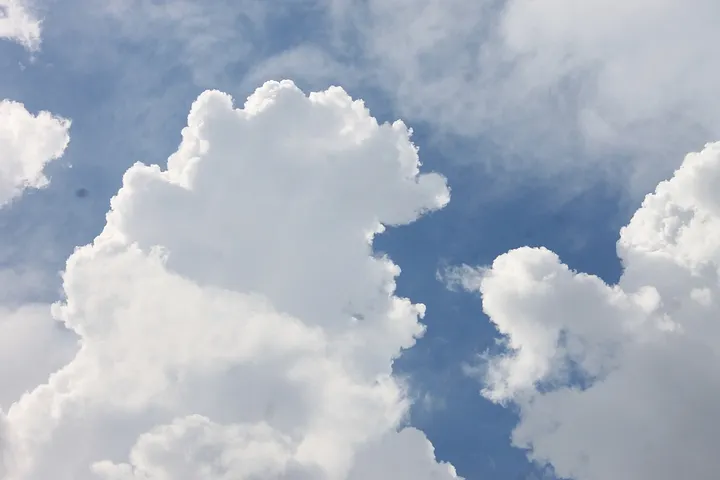
We’ve all done it — looked at the sky and seen something that wasn’t really there. A dinosaur, a ballerina, a ship with full sails. We know it’s just clouds, vapor drifting across blue. But for a moment, we see something else.
That act — the shift between abstract form and perceived image — is where Visioformism begins.
A Movement Rooted in Perception
Visioformism is an art movement I’ve developed over years of practice and reflection, and it’s not based on any single style or technique. Instead, it’s based on a process of seeing. More specifically, it’s about how form becomes vision — and how both artist and viewer participate in that transformation.
Visioformism centers on a simple question: What might we see if we let images arise naturally, rather than dictate what they should be?
In practical terms, Visioformism often finds its most intuitive expression through painting — through abstract gestures like brushstrokes, smears, pours, or scratches. There is no preliminary sketch, no predetermined subject. The surface then becomes activated through instinct of the artist — through movement, and emotion.
But this is only one path. While painting makes the process visible in a particularly vivid way, Visioformism is not bound to any single medium. It can happen in sculpture, photography, collage, or even outside of art entirely — wherever form appears before meaning, and perception takes the next lead.
The principle remains the same: meaning emerges not through design, but through discovery. A canvas, a found object, a weathered wall — each can become a field of possibilities, shaped as much by the unconscious as by the hand. One part material, one part mind.

From Marks to Meaning
Once the initial layer is down, something shifts. The artist steps back. Looks again. Patterns begin to emerge. Perhaps the curve of a shoulder, the outline of an animal, the trace of a gaze. These are not imposed — they’re discovered. Like faces in clouds or creatures in tree bark, they appear to the attentive eye.
This is where the second stage of Visioformism begins: the stage of interpretation. The artist begins to highlight certain areas, bring forward hidden forms, perhaps refine the contrast or adjust the color. But crucially, the goal is not to make everything clear. Visioformism values suggestion over definition, ambiguity over closure. The painting becomes a place where meanings flicker rather than fix.
Art That Sees Back
What sets Visioformism apart is not just the method of making, but the experience of viewing. These are not images to be passively consumed. They ask something of you. They are meant to be entered, revisited, puzzled through. The viewer becomes a co-author, projecting their own memories and emotions into the work.
In this sense, Visioformism is interactive — not digitally, but psychologically. Every time someone looks at the same painting, they may see something different. A fish becomes a ghost. A doorway becomes a mother’s silhouette. None of these are wrong. On the contrary, they are the point.
The artist offers a possibility. The viewer completes the vision.
This perceptual loop between abstraction and figuration draws inspiration from Carl Jung’s idea of the “apperceptive mass” — the reservoir of images, memories, and symbolic structures that live within us. According to Jung, we do not perceive neutrally; we perceive through what we already carry. Visioformism embraces this: every image we see in the paint is shaped not only by the artist’s mark, but by our own psychic interior.

Why This Matters Now
We live in an age of speed, clarity, and constant stimulation. Art is often expected to shock, explain, or deliver a message. But what if we want something different? What if we want space to think, to feel, to wonder?
Visioformism pushes back against the noise. It slows you down. It asks you to look, again and again, until something clicks — not because you were told what to see, but because you found it yourself.
It’s also a deeply humanist response to the rising tide of AI-generated imagery. While machines can produce endless pictures, they do not perceive. They do not guess at clouds. Visioformism insists on the value of human vision — not just optical, but emotional, intuitive, imperfect. It’s about perception as a living, breathing act.
A Return to the Inner Child
On a personal level, Visioformism is also a return. A return to something many of us knew instinctively as children: the joy of finding meaning where none was intended. The quiet delight of turning chaos into something familiar. The curiosity to search a shapeless sky and say, “I see something there.”
That’s the heart of Visioformism. It’s not just about making art. It’s about making space for vision — for ambiguity, for surprise, for the slow unfolding of meaning through the eyes of both artist and viewer.
So next time you look at a painting — or at the clouds — pause a little longer. Let your eyes wander. Let your imagination speak.
You might be surprised at what you find.