On Art Seeding: Why We Do It — and Why You Should Too
If I were to write a dictionary article, I would define Art Seeding as a structured urban cultural strategy that introduces original artistic interventions into non-traditional city spaces in order to activate perception, increase cultural density, and gradually transform emerging districts into living ecosystems.
The definition may sound overcomplicated at first. In many ways, it is meant to be. Art Seeding was conceived by me together with my partner in this initiative, Sofia Tkach, founder of Beyond Architecture Studio (B.A.S), not as a slogan, but as a method. A way of thinking about how art can inhabit a city — especially a city that is still evolving.
At its core, Art Seeding begins with a simple observation: cities are not only built from materials and infrastructure; they are built from perception. A district becomes meaningful not when it is completed architecturally, but when it starts to be experienced differently by those who move through it.
This is where seeding becomes a useful metaphor.
When one plants a seed, there is no immediate transformation. The soil looks unchanged. Yet something has been introduced into it — something with potential. Art Seeding works in a similar way. It introduces works of art into transitional or developing urban environments, allowing them to interact with everyday movement, with architecture, with commerce, and with the unpredictability of public life.
The objective is not to overwhelm space, but to gently shift it.
The City as a Perceptual Field
Most discussions about urban development revolve around planning, economics, or functionality. These are essential dimensions. But alongside them exists another layer — the perceptual one. How does a place feel? What associations does it carry? Does it invite curiosity, pause, conversation?
Art Seeding operates in this perceptual layer.
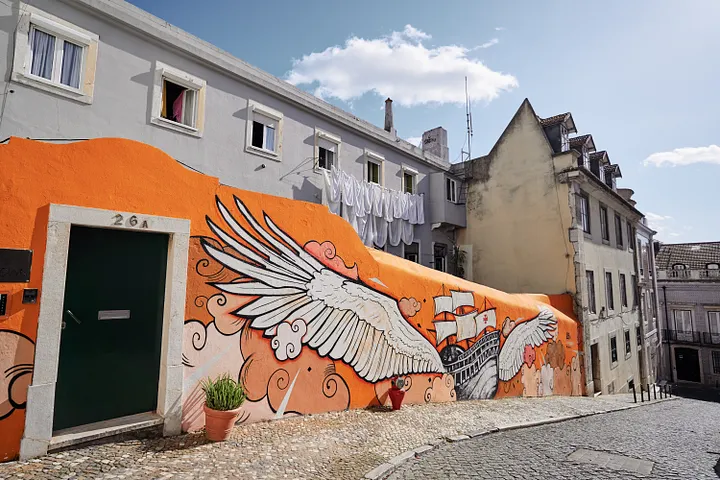
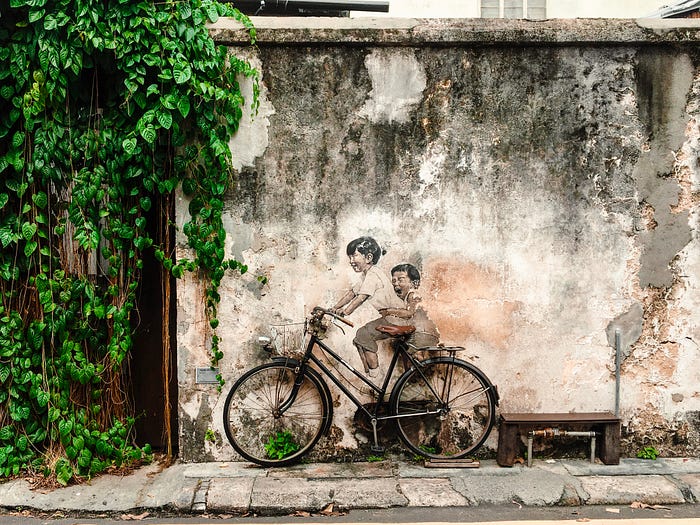
When artistic works appear within everyday circulation — along a walkway, within a courtyard, against an industrial façade — they create moments of awareness. The passerby may not know the artist, the intention, or the broader framework. That is secondary. What matters first is the interruption of habitual seeing.
Over time, repeated artistic presence increases what might be called cultural density. A place begins to accumulate references, stories, and visual memory. The area becomes more than a coordinate on a map. It acquires character.
This gradual accumulation is central. Art Seeding is not conceived as a single event. It is a recurring practice. Each intervention contributes to a growing ecosystem of meaning.
From Intervention to Ecosystem
The structure of Art Seeding can be understood in three stages: insertion, activation, and continuity.
Insertion places art in unexpected yet thoughtful relation to its surroundings. Activation occurs when viewers engage — consciously or subconsciously — with what they encounter. Continuity ensures that these encounters are not isolated. They build upon one another.
In Al Khayat, Dubai, an area that naturally extends the cultural energy of Alserkal Avenue, this methodology has begun to take shape. The district is still forming its long-term identity. That very openness makes it fertile ground.
Art Seeding here is not imposed as decoration. My R/A/G (Reinvention Art Gallery) vision is to integrate it into the daily rhythm of the place. Works emerge in the area within the flow of business, education, and movement. Some eventually transition into more formal contexts — exhibitions, curated presentations, institutional frameworks. This continuity matters. It allows artistic value to be sustained rather than dissipated.
The relationship between street and structure becomes evolutionary rather than oppositional.
Why It Matters
Contemporary cities are increasingly efficient. They are optimized, connected, and rapidly constructed. Yet efficiency alone does not generate belonging. Belonging grows from shared references and shared experiences.
Art Seeding contributes to this by offering moments of reflection within movement. It invites residents and visitors alike to see their surroundings as something more than functional space. It introduces generosity into the environment — the generosity of expression, of imagination, of creative risk.
Importantly, Art Seeding also supports artists. It offers them platforms that exist between anonymity and institutional containment. It provides visibility while maintaining a connection to long-term cultural frameworks.
In this sense, Art Seeding is as much about civic development as it is about artistic practice.

Why We Do It — and Why You Should Consider It
Sofia and I developed Art Seeding because we believe that emerging districts deserve cultural intention alongside architectural ambition. A city grows more livable when art is embedded within its everyday life rather than confined to its margins.
Participation in Art Seeding can take many forms. An artist contributes work. A developer provides space. A business hosts an intervention. A resident simply engages and reflects. Each role strengthens the ecosystem.
To seed art is to invest in perception. And perception, over time, shapes identity.
When we speak of making cities more interesting, more giving, and more livable, we are speaking about this accumulation of subtle shifts — moments of awareness that gradually redefine how a place is experienced.
Art Seeding is one way of initiating that process. And once the process begins, it tends to grow.